Venetian blinds in Teesside, measured and fitted
Made-to-measure Venetian blinds in Teesside cost £55 to £150 a window supplied and fitted. Aluminium slats in 16mm, 25mm or 35mm and faux wood in 35mm or 50mm, tilted for precise light control, wipe-clean and suited to kitchens, bathrooms, offices and utility rooms.
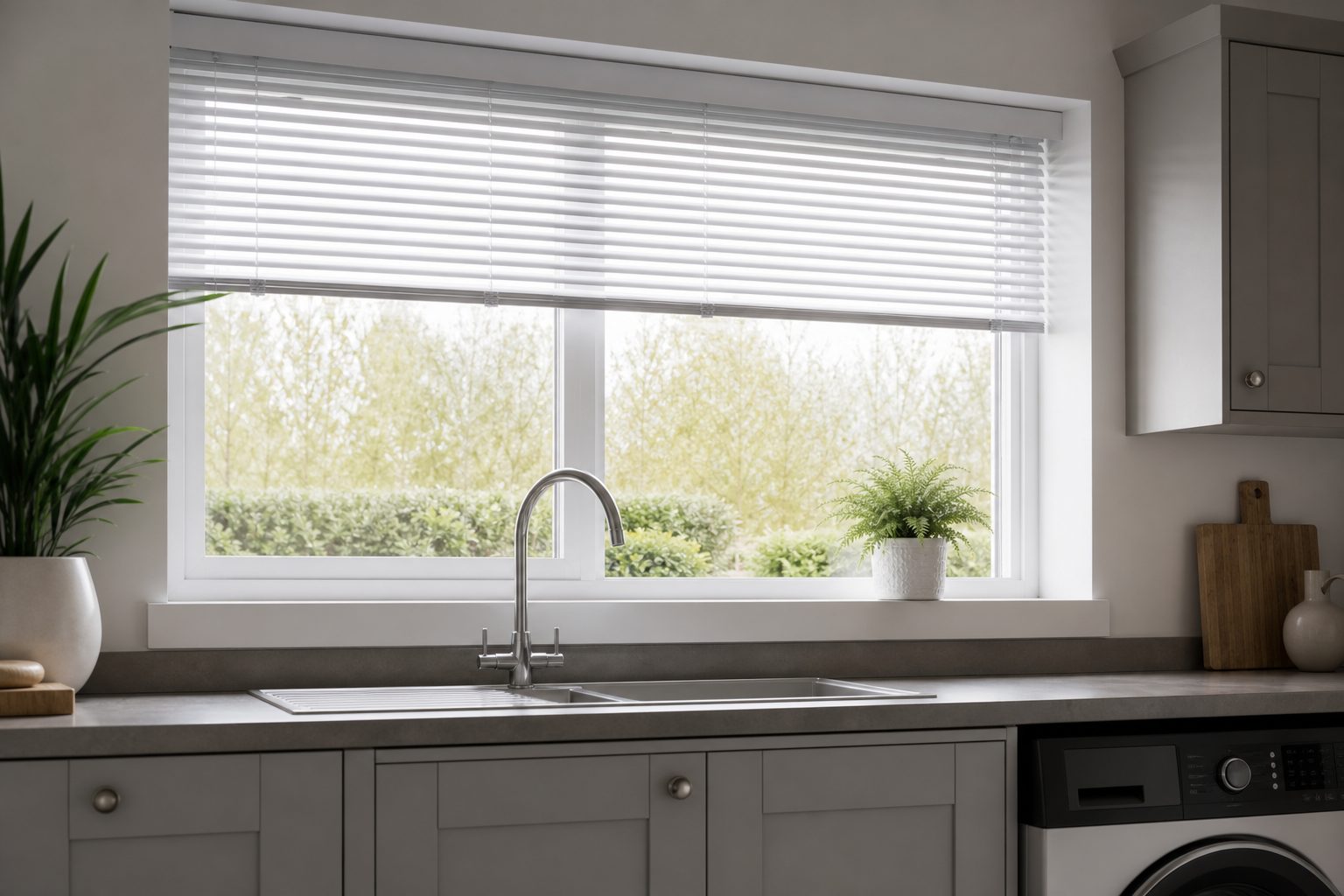
Control, not just cover
Every other blind is essentially open or closed. A Venetian gives you a third setting: closed to the outside, open to the light. Tilt the slats up and daylight bounces off the ceiling into the room while nobody on the street can see in. That single trick is why Venetians dominate front-facing kitchens and ground-floor rooms on busy Teesside roads, where privacy is needed all day but darkness is not.
Aluminium or faux wood
Aluminium slats are thin, light and cheap to run: 16mm micro slats for small windows and door panels, 25mm as the everyday choice, 35mm for larger openings. They come in hundreds of colours including perforated, matt and metallic finishes, and they shrug off steam entirely.
Faux wood is a PVC or composite slat, 35mm or 50mm, that looks like painted or stained timber and behaves like plastic. In a Teesside bathroom or a kitchen with a hard-working hob that is exactly what you want: the look of a wooden blind with none of the warping. Real timber slats are covered on the wooden blinds page.
Prices across Teesside
Most windows quote £55 to £150 supplied and fitted. A narrow aluminium blind for a utility window sits near the bottom; a wide 50mm faux wood blind for a lounge window at the top. Wand tilt instead of cord costs little or nothing extra and is safer with children about, and perfect-fit frames that clip into uPVC beading, no drilling and no gaps, add roughly £20 to £45 a window and are ideal for conservatories and tilt-and-turn frames.
Where they work best
- Kitchens: aluminium wipes down in seconds, including the greasy film that fabric quietly absorbs.
- Bathrooms: aluminium or faux wood, never real timber, above a bath or shower.
- Home offices and commercial units: slats angled to kill screen glare without darkening the room.
- Conservatories and uPVC doors: perfect-fit frames hold the blind against the glass so it moves with the door and never swings.
Cleaning, honestly
A Venetian has more surface than any other blind, so it collects more dust. In practice a vacuum brush along the closed slats every few weeks handles it, and aluminium can be taken down and washed if a kitchen blind gets genuinely greasy. Anyone who tells you they are maintenance-free is overselling; anyone who says they are a nightmare has never used a brush attachment.
Getting the fit right
Venetians are heavier than rollers, so the fixings matter. In a plaster reveal they need proper plugs, in a shallow recess a face fix above the opening, and on a bay each section is measured and bracketed separately. Where a window has a projecting handle, either the blind is packed off the frame with spacers or a perfect-fit frame is used instead, and the quote should say which before anyone drills.