Blackout blinds in Teesside, measured and fitted
Made-to-measure blackout blinds in Teesside cost £60 to £180 a window supplied and fitted. Coated blackout fabric stops light through the panel, and side channels or an exact-fit mount close the edge gaps that leave most so-called blackout blinds glowing at 5am in June.
Why most blackout blinds are not
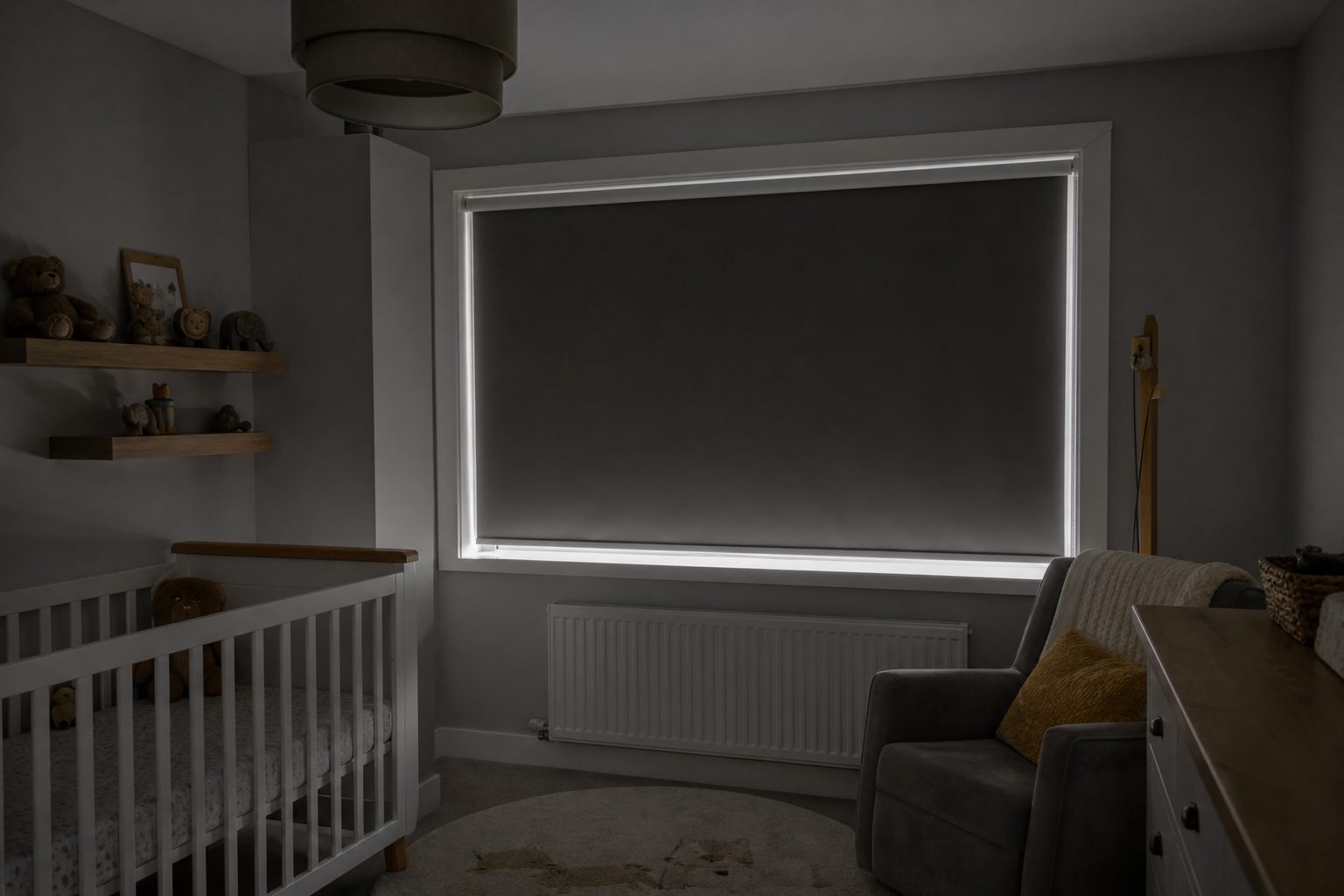
Buy a blackout roller blind, fit it inside the recess, and on a bright June morning you will still have a bright outline around three sides of the window and a stripe of daylight down the wall. The fabric was never the problem. Light does not come through a coated blackout panel; it comes around it, through the 8 to 15mm of clearance every recess-fitted blind needs to travel freely.
Real darkness is a system: blackout fabric plus a strategy for the edges. That is the difference between a baby who sleeps until seven and one who is up with the sun.
The three ways to close the gaps
- Side channels: slim aluminium tracks fixed to the reveal that the fabric runs inside. The most effective option, and the one that turns a nursery genuinely dark. Adds roughly £30 to £60 a window.
- Exact fit: mount the blind on the wall above the opening, oversized so it overlaps the reveal by 5 to 10cm each side. Costs nothing extra and removes most of the leak.
- Perfect fit frames: on uPVC windows, a frame clipped into the beading holds the blind tight to the glass with no side gap at all. Neat, though the light path around the sash still needs checking.
Prices across Teesside
A blackout roller quotes £60 to £180 a window supplied and fitted. Add side channels for full darkness. Blackout-lined Roman blinds run £110 to £280 and suit a bedroom where appearance matters as much as light. Blackout vertical louvres for a patio-door bedroom in a bungalow sit around £70 to £160, and blackout cellular blinds, which also insulate, are worth pricing for a cold north-facing room.
Who actually needs it
Teesside is a shift-working region: process operators on the chemical plants at Billingham and Wilton, port and logistics staff at Teesport, NHS staff across the hospitals in Middlesbrough and Hartlepool. Daytime sleep needs proper darkness, not dimness. Add nurseries and toddler bedrooms in the summer months, home cinema rooms, and any room where a streetlight sits directly outside the window.
Blackout and safety together
The rooms that most need blackout are usually the rooms with children in them, which makes cord-free operation more than a nice-to-have. Cordless spring rollers and rechargeable motorised blinds both remove the hazard entirely, and motorisation has a practical bonus in a nursery: the blind can be closed without opening the door. Where a chain is used, BS EN 13120 breakaway devices or tensioners must be fitted and fixed to the wall as part of the installation.
The heat bonus
Coated blackout fabric and cellular blackout blinds both cut solar gain noticeably in a west-facing bedroom that bakes on summer evenings, and slow heat loss through single or older double glazing in winter. It is not insulation in the building-fabric sense, but on a cold north-east night the difference at the window is real.